
The visionary filmmaker arrives on fashion’s grandest stage — and rewrites history in the process.
By Marcus G. Blassingame | INBLVCK | May 2026
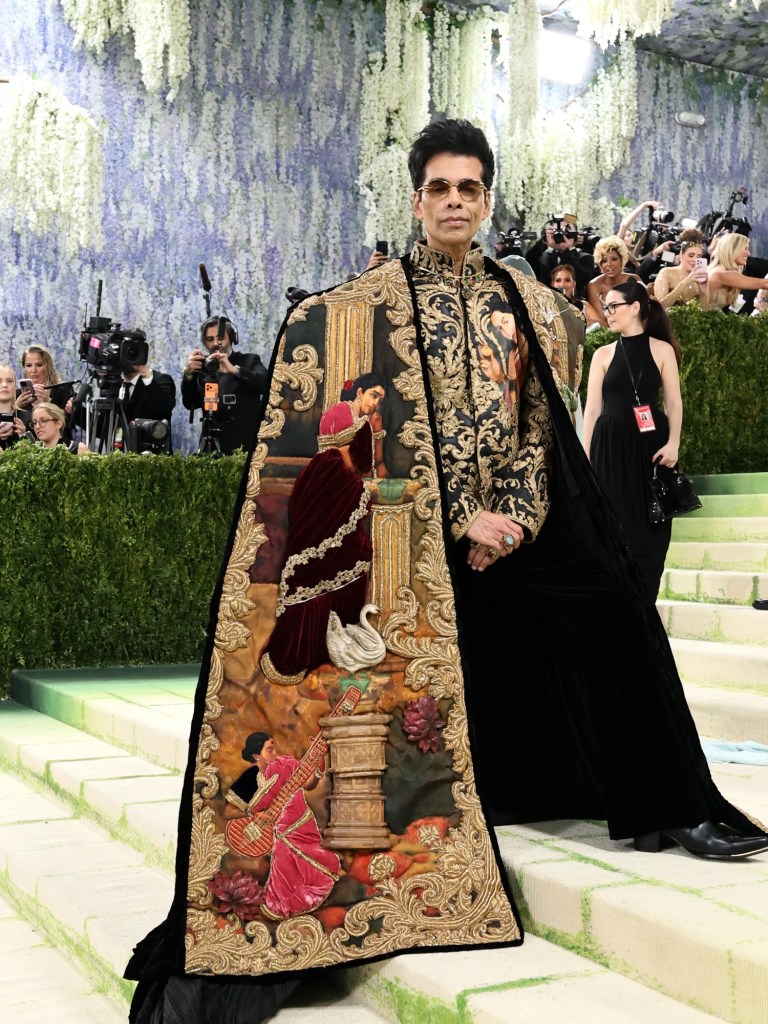
There are moments in the grand theatre of culture where fashion transcends its own magnificent boundaries — where cloth, craft, and identity converge into something altogether more profound, more eternal. On the resplendent evening of May 4th, 2026, beneath the hallowed columns of the Metropolitan Museum of Art, one such moment was quietly, gloriously written into history. Karan Johar — celebrated filmmaker, cultural architect, and undeniable luminary of Indian cinema — ascended the Met Gala’s storied steps as the first Indian filmmaker to ever grace its legendary red carpet. And he did not simply arrive. He announced himself to the world.
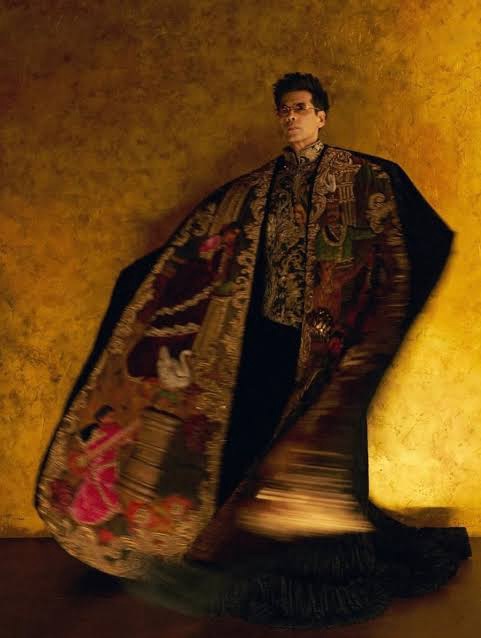
A Canvas That Breathes
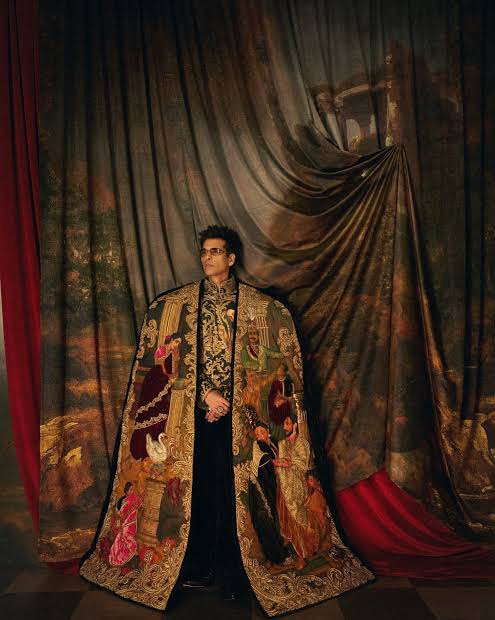
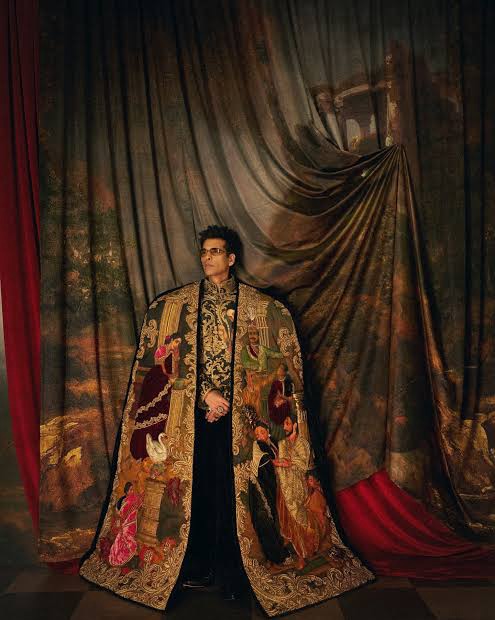
Draped in an extraordinary custom creation aptly christened “Framed in Eternity,” conceived by his cherished longtime collaborator and dear friend Manish Malhotra, Johar embodied the gala’s transcendent theme of “Costume Art” with an eloquence that left fashion’s most discerning arbiters utterly breathless. The decree of the evening’s dress code — “Fashion is Art” — could not have found a more devoted and impassioned disciple.
At its magnificent heart, the ensemble was a deeply moving, wearable homage to the immortal Raja Ravi Varma, the nineteenth-century Indian maestro whose painted canvases captured the very soul of a civilization. Johar did not merely wear fashion that evening. He carried an entire cultural legacy upon his shoulders — quite literally.
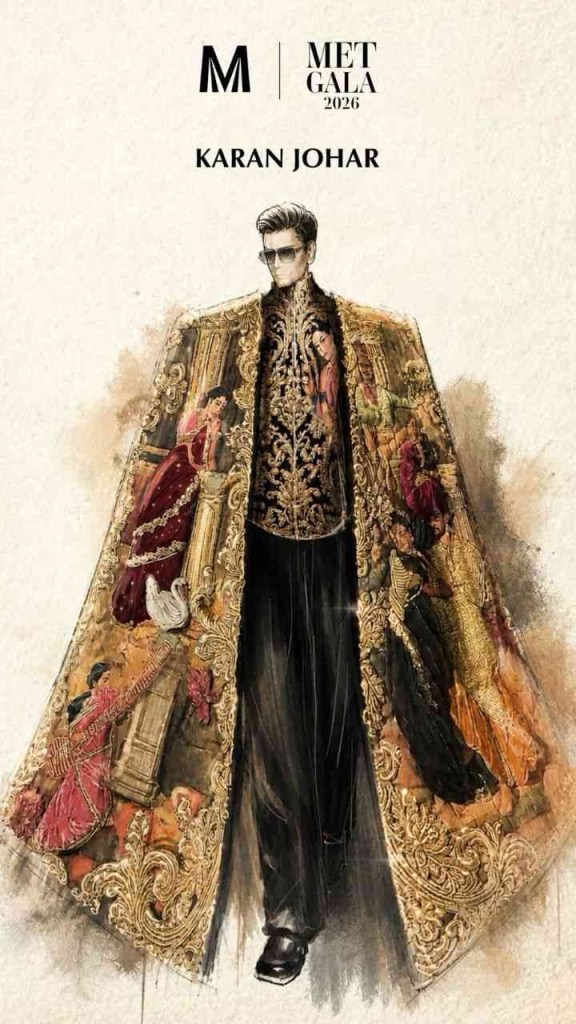
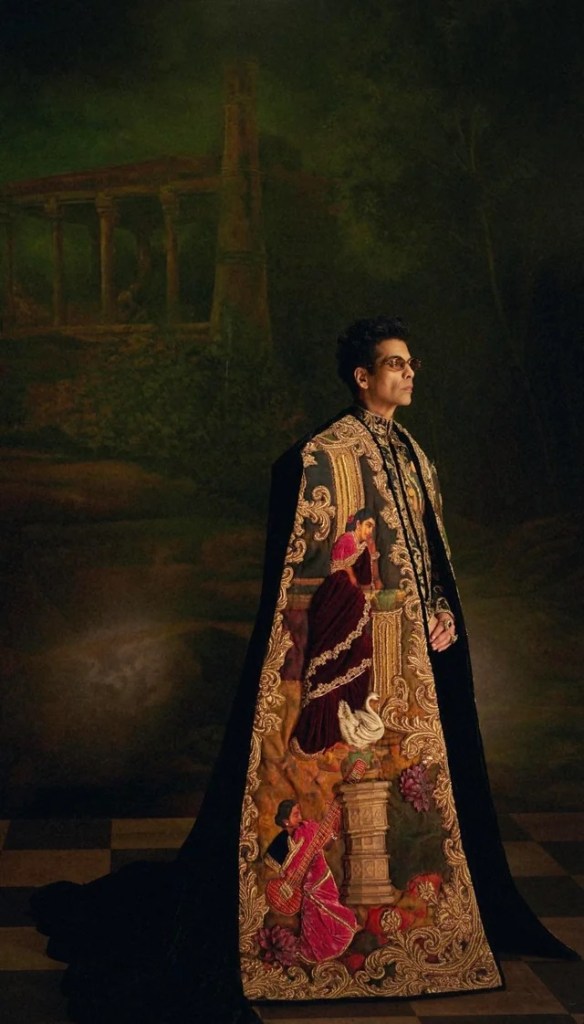
A sharply structured, impeccably tailored black bandhgala jacket formed the regal foundation of the look, its silhouette commanding and dignified in the most noble of traditions. Yet it was the dramatic, sweeping six-foot-long cape that stole the breath from every room it graced. Unfurling behind him like a living gallery wall, the cape bore entirely hand-painted motifs drawn directly from Varma’s most iconic and revered masterworks — the ethereal Hamsa Damayanti, the luminous Kadambari — rendered in strokes of breathtaking artistry. Swans in full celestial grace, lotuses blooming in gilded splendour, and the solemn grandeur of ancient temple pillars swept across the fabric in a visual narrative that was nothing short of extraordinary.
To adorn this wearable monument, Johar selected antique gold and gemstone jewels from his own beloved label, Tyaani Jewellery — each piece a whisper of Indian royal heritage, each glint of gold a quiet, proud declaration of origin and identity.
The Eyes Have It
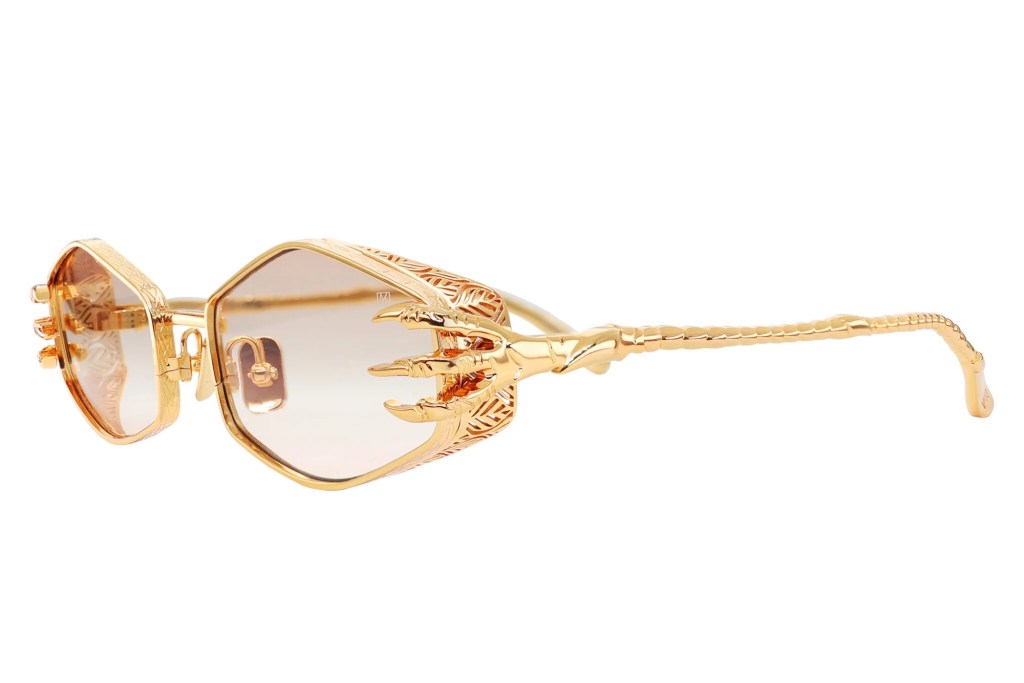
Yet to speak of Karan Johar’s magnificently considered ensemble without lingering upon the final, crowning detail would be a most grievous editorial oversight. Perched with deliberate and exquisite intention upon the bridge of his nose were frames of the most rarefied distinction — eyewear by the celebrated Swedish luxury house Anna-Karin Karlsson, sourced through the distinguished purveyor R. Kumar Opticians, as Johar himself graciously and meticulously credited in his own caption.
Moneycontrol, in its authoritative coverage of the evening, further illuminated the significance of this singular accessory, identifying the frames as belonging to Anna-Karin Karlsson‘s breathtaking 24-karat gold-plated range — a collection that exists at the most rarified intersection of optical artistry and unapologetic opulence. In a look already laden with the weight of cultural history and ancestral gold, the choice of these luminous frames was nothing short of poetic — a gilded punctuation mark upon an already extraordinary visual sentence.
Every detail, it seemed, had been chosen not merely with taste, but with intention. Nothing was accidental. Nothing was incidental. From the sweep of the painted cape to the gleam of the gold upon his face, Karan Johar arrived that evening as a man who understood, with magnificent clarity, that true style is nothing less than a complete and considered act of self-expression.
The Weight of Devotion
To speak of this ensemble purely in the language of aesthetics would be to do it a profound disservice. The staggering truth of “Framed in Eternity” lies not only in what the eye beholds, but in what the hands endured to bring it into existence. Over 5,600 painstaking hours. More than 80 devoted artisans. Nearly three months of relentless, reverent craftsmanship. Each brushstroke on that magnificent cape was an act of cultural devotion, a love letter from India’s most gifted hands to the world’s most watched stage.
This was not fashion assembled — it was fashion consecrated.
A Full Circle Moment
In the warm afterglow of the evening, Johar spoke with characteristic candour and unmistakable emotion, describing his debut as a “full circle moment” — a sentiment that resonated far beyond mere personal milestone. It was, he reflected, a deeply poignant privilege to stand upon that storied carpet one year after his beloved friend and collaborator Shah Rukh Khan made his own luminous debut at the very same gala. The decades-long bond between these two titans of Indian culture was, in Johar’s own gracious telling, a cornerstone reason for his presence there at all — a tribute woven not only into the fabric of his cape, but into the very spirit of the evening.
“This is not just fashion,” he declared with quiet, unwavering conviction. “This is a moving canvas — a testament to Indian tradition on the world’s grandest stage.”
And the world, without question, was watching.
The Verdict of the Evening
Fashion’s most esteemed critics and distinguished publications were unequivocal in their admiration. Karan Johar was celebrated, widely and resoundingly, as one of the Best Dressed Men of the entire evening — an accolade earned not through extravagance alone, but through the far rarer and more coveted quality of meaning. His look did not merely participate in the conversation of the night. It elevated it entirely.
As the grand festivities drew into the velvet hours of the after-party, Johar unveiled yet another masterstroke of sartorial intelligence — a sleek, razor-sharp all-black ensemble by the illustrious Dries Van Noten, his resplendent Tyaani jewels remaining as the singular, sovereign focal point. From cultural monument to refined evening elegance, he navigated the full spectrum of the night with the ease of a man entirely, magnificently at home.
The Legacy of a Single Evening
History, when it is made with such beauty and such intention, has a way of announcing itself quietly — in the rustle of a painted cape, in the glimmer of ancestral gold, in the unhurried, certain stride of a man who knows precisely why he is there.
Karan Johar did not simply attend the Met Gala 2026. He opened a door — wide, luminous, and irrevocably — for every Indian voice, every Indian hand, and every Indian story that dares, with grace and with fire, to claim its place upon the world stage.
And darling, that stage will never quite look the same again.
IN BLACK MAGAZINE
INBLVCK — Where Culture Meets Couture.


Leave a Reply