
By Marcus G Blassingame
A Winged Triumph: Yu-Chi Lyra Kuo’s Met Gala Masterpiece by Jean Paul Gaultier
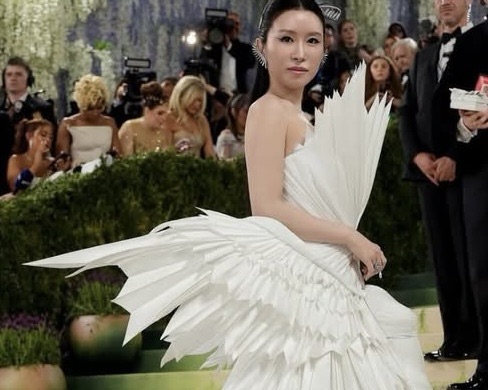
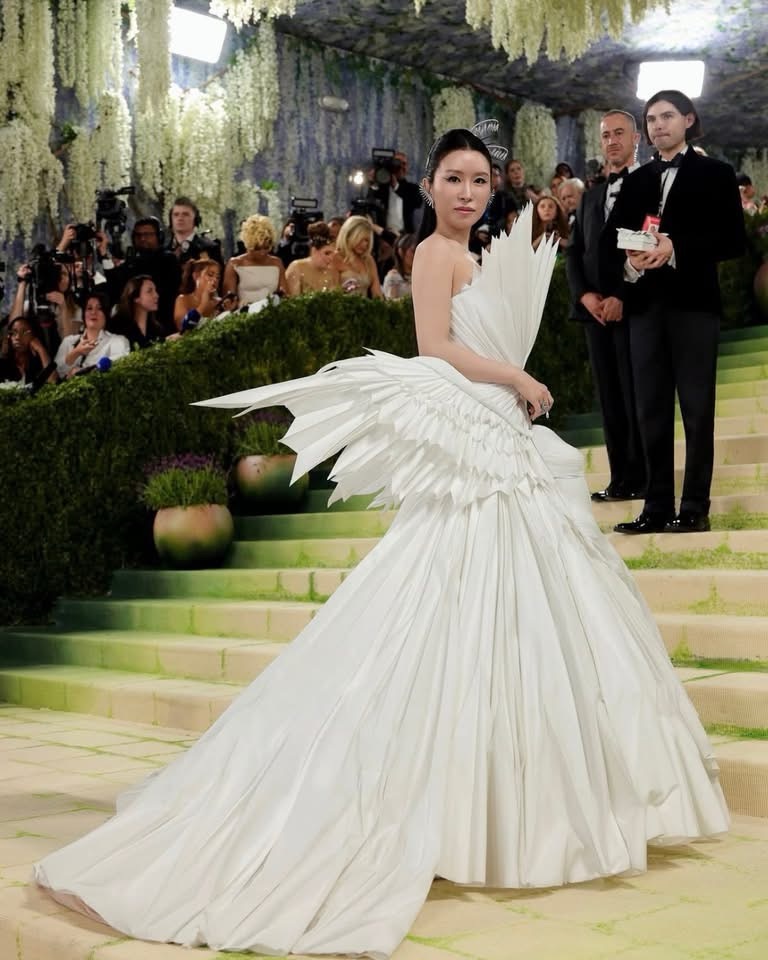
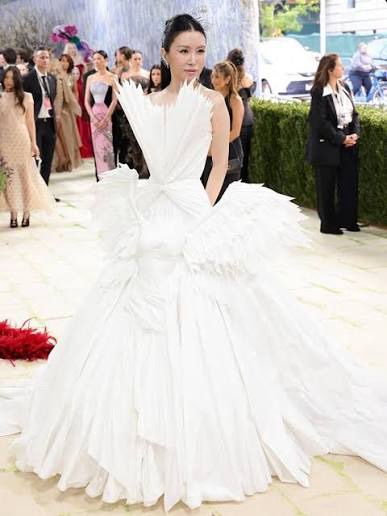
In a glittering constellation of couture brilliance, Yu-Chi Lyra Kuo glided into the 2026 Met Gala encased in a sculpture of pure ivory radiance. A custom all-white gown by Jean Paul Gaultier, this masterpiece stood as an ode to movement, a chiseled hymn to form, and a shimmering meditation on the ideal of fashion as art.
The bodice unfurls in a painstakingly engineered fan of wings, a silhouette that reads as both protean and poised, as if the wearer’s posture were a living hinge between heaven and earth. Crafted from 142 yards of cotton poplin, the gown’s backbone is reinforced with 43 yards of steel bones and piano strings, a lattice of resolve that preserves the sculpture’s integrity amid the tempo of a red-carpet night. The piece demanded more than 900 hours of devotion within the revered Gaultier haute couture atelier, a testament to devotion, precision, and the magic of countless daylight hours poured into a single form. The ensemble fuses classical Greek drapery with the razor-edged precision of origami, marrying the soft, sweeping lines of antiquity with the crisp geometry of Japanese paper-folding.
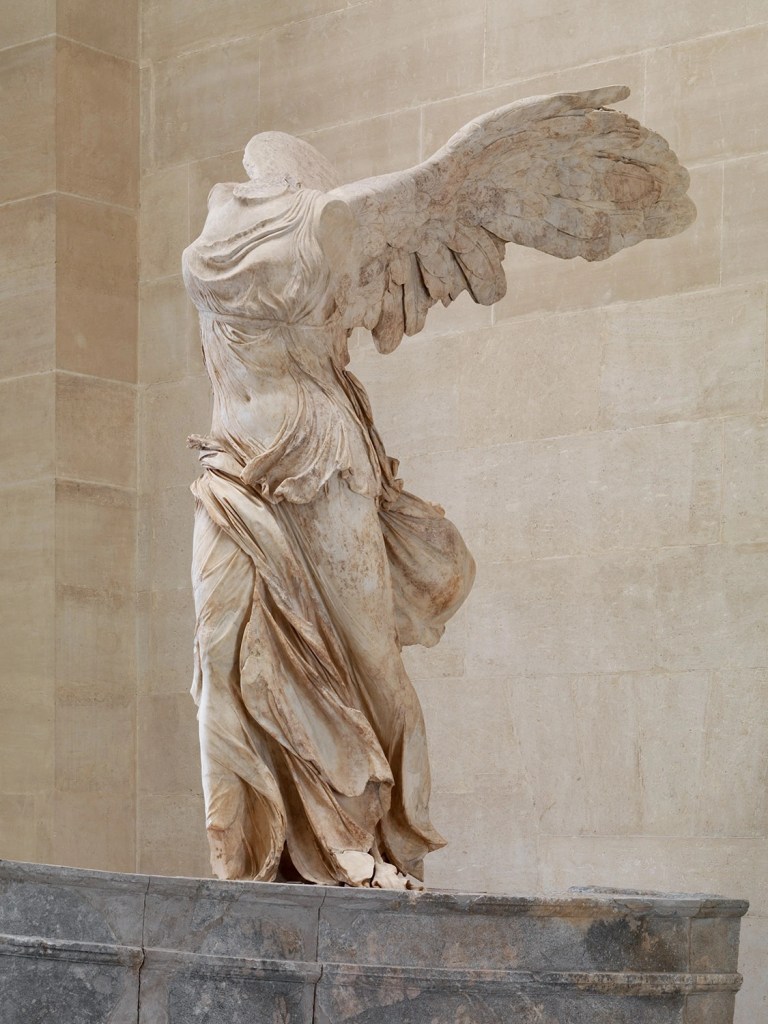
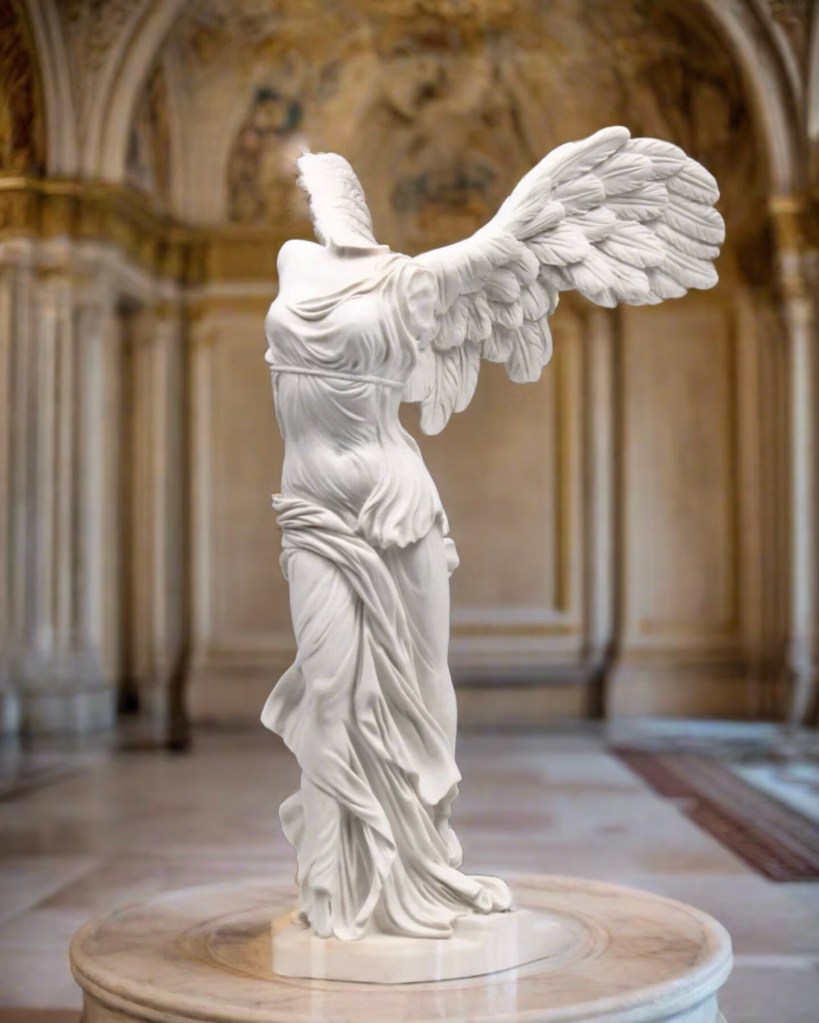
The gown is a reverent nod to the Winged Victory of Samothrace, the Hellenistic marble masterpiece that embodies motion, triumph, and divine force through a revelation of sweeping wings in graceful ascent. By translating stone into satin, the dress channels the statue’s aura—movement in stillness, power in poise, and a sense of forward momentum that defies gravity even as it embraces it.
In a deliberate ballet of restraint, Kuo wore no heavy jewelry, allowing the sculptural lines to speak with unabashed eloquence. The absence of ornamentation rituals the gaze toward the gown’s architecture and its living wearer. The undying white serves as a canvas for light itself—each photon caught and refracted by folds and edges, turning the wearer into a beacon of pristine modern myth.
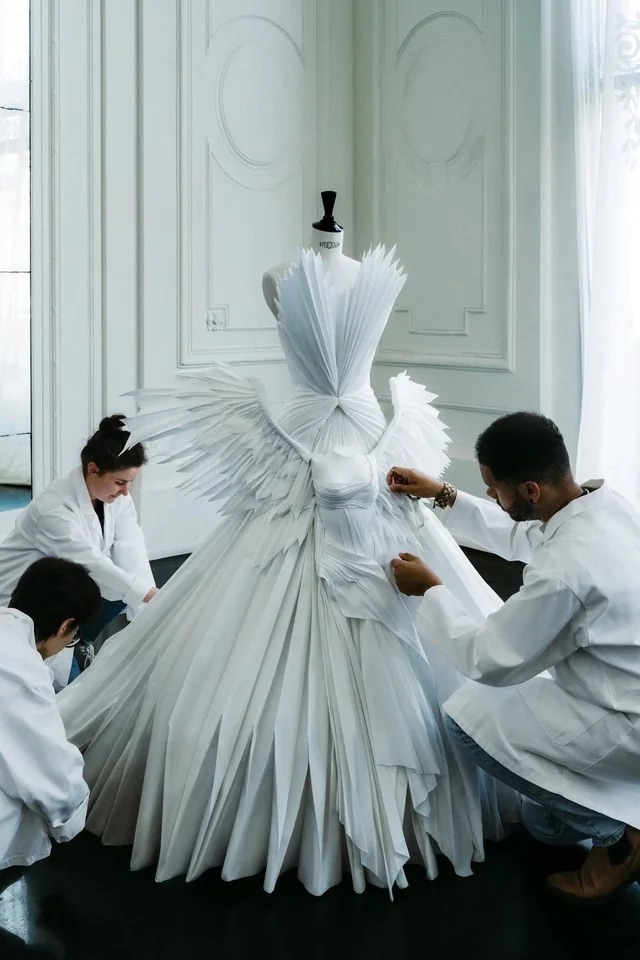
A remarkable harmony between muse and maker marks the personal narrative of this appearance. Kuo reportedly designed the look herself, layering personal resonance with haute couture craftsmanship. Her inspiration traces to John Galliano’s 2007 Madame Butterfly collection, a childhood obsession crystallized into a contemporary anthem of strength, beauty, and metamorphosis. The gown’s narrative—an ascent, a declaration, a triumph—aligns seamlessly with the Met Gala’s “Fashion Is Art” edict, proving that couture can incarnate history without surrendering to grandstanding.
The gown’s silhouette evokes the dynamic sweep of wings taking flight, a kinetic sculpture translating the Louvre’s marble into a living, luminous moment. The marriage of cotton poplin, steel bones, and piano strings is a virtuoso demonstration that couture, at its apex, is not merely clothing but a kinetic monument—an object that breathes, balances, and commands reverent attention. By wrenching history into the present, this look forges a dialogue between ancient marble and contemporary sculpture, between a museum’s hush and a gala’s electric chorus.
Yu-Chi Lyra Kuo’s Met Gala appearance stands as a luminous coronation of fashion as an art form—where sculpture, history, and personal storytelling converge in a single, transcendent gesture. The gown does not merely clothe the wearer; it elevates her, enshrines her, and sends a clear signal to the world: in couture, triumph can be worn as gracefully as it is imagined.


Leave a Reply