Anok Yai Reimagines History at the Met Gala: A Sculpture in Black Taffeta
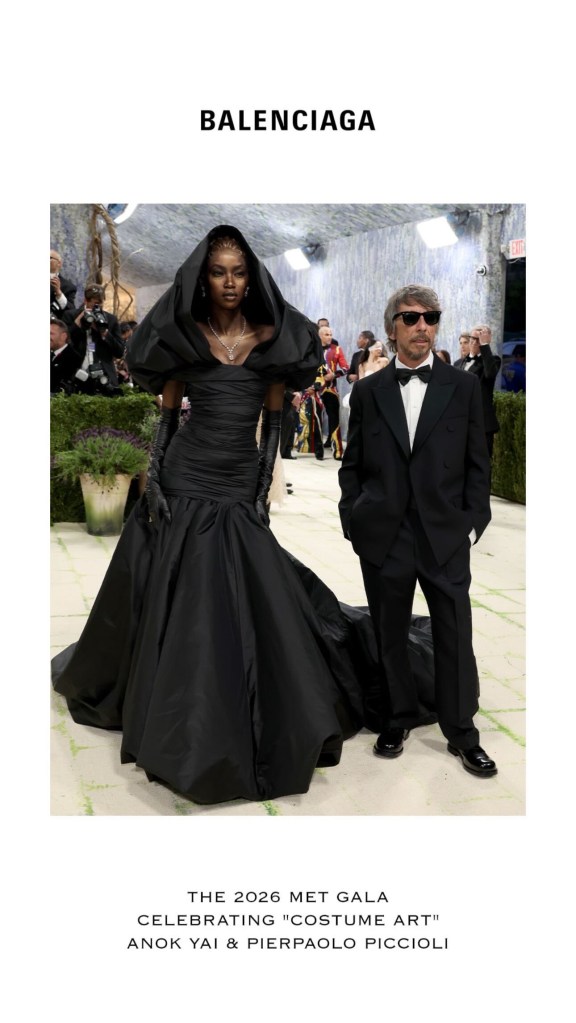
In the hushed gleam of the Metropolitan Museum’s grand stair, where photographers’ shutters bloom like constellations, Anok Yai arrived not merely as a guest of the Met Gala but as a living sculpture—a consecration of form, memory, and quiet triumph. Her 2026 appearance, commissioned by Pierpaolo Piccioli for Balenciaga, unfolded as a meditation on time’s patient grace, a union of sacred iconography and contemporary couture that felt at once reverent and utterly modern. The ensemble stood as a testament to fashion’s power to translate history into a single, breath-held moment.
The concept, announced with the dress code “Fashion Is Art” and the manifesto “Costume Art,” invited attendees to reduce the wardrobe to a study of suggestion and silhouette. Anok’s interpretation answered that invitation with a statuesque poise: a figure carved from night, luminous with a gilded countenance, grounded in the stillness of stone yet alive with the pulse of present-day resilience. The look’s gravitas resided not in ornament but in restraint, in the way light gathered on architectural folds and then teased them into shadows that spoke of endurance and grace.
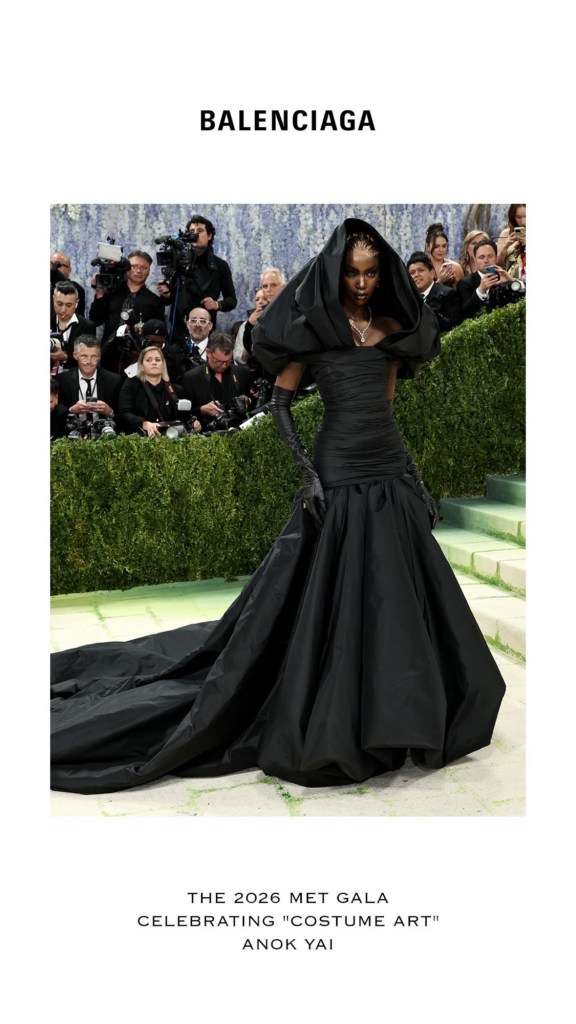
The centerpiece was Balenciaga’s sculptural gown—a majesty of black taffeta that fanned out with a measured gravity, every pleat and crease a deliberate line in a larger composition. The fabric’s architecture suggested cathedrals and antiquities, a modern reliquary fashioned for a woman who moves through the world as a living emblem. It wasn’t merely worn; it was inhabited. The gown’s weight and structure allowed Yai to move with the cadence of an ancient statue, to be viewed not only in motion but as an artifact of history made contemporary.
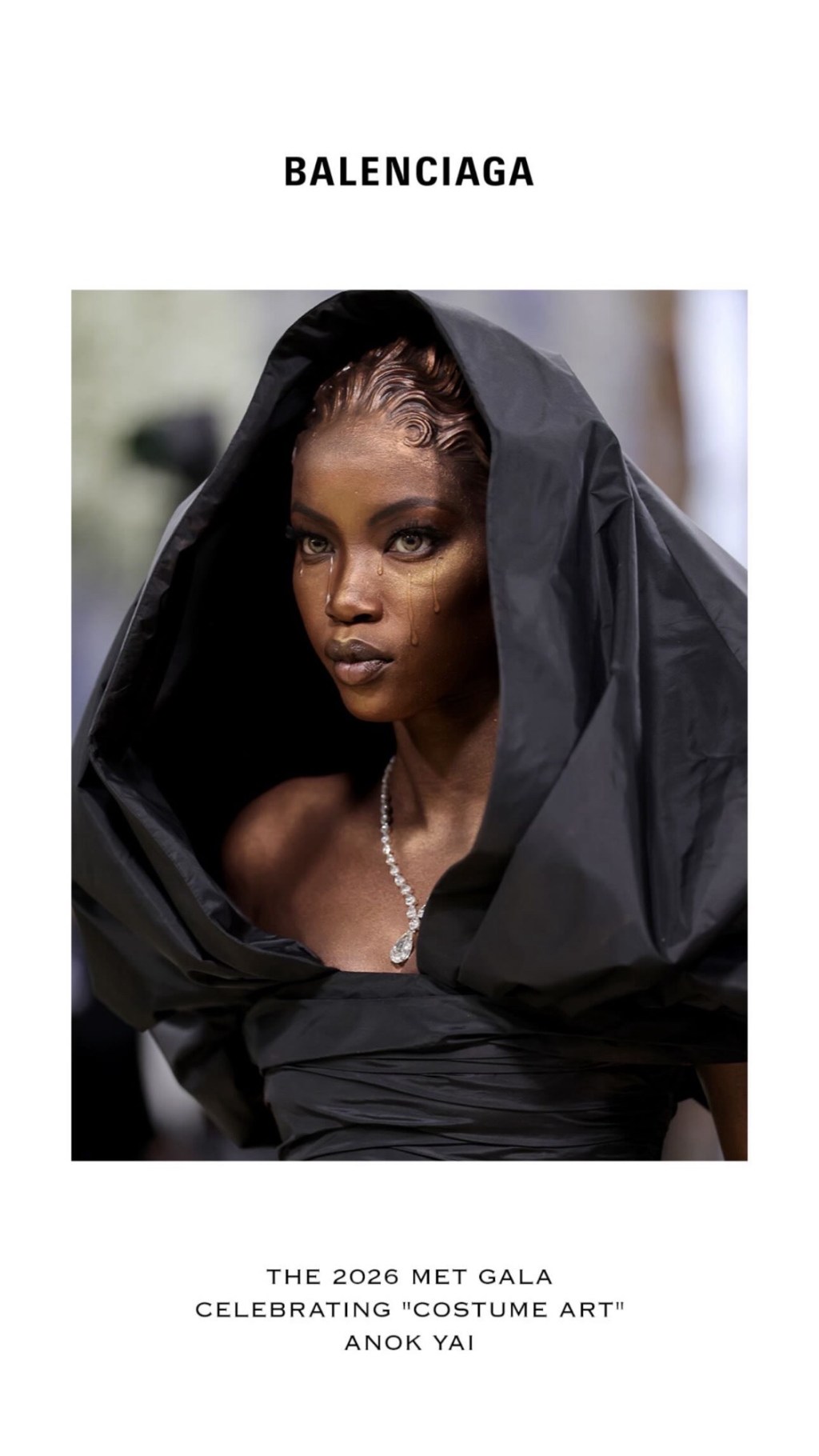
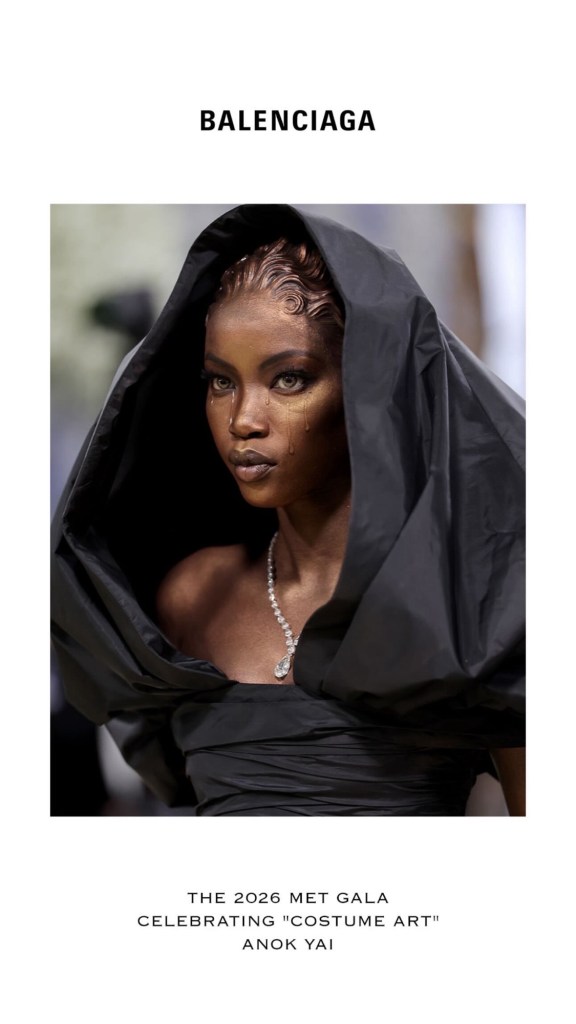
Across the visage and head, artistry forged a transformative alchemy. A gold-painted face transformed Anok into a gilded reliquary—an expression of reverence and luminosity that refracted the flashbulbs into halos of memory. The gilding did not seek to hide but to reveal, catching the eye with a quiet, almost sacred radiance that suggested divinity without forsaking humanity. Completing the effect, sculptural prosthetic hair rose in deliberate, architectural grace, a crown-like extension of the gown’s own form. The headpiece did not shout; it resonated, a quiet amplification of presence.
The design drew its deepest symbolism from sacred motherhood and sorrow—the Black Madonna and the Mater Dolorosa. In the face of global discourse, the look offered a visual hymn to shared grief and collective resilience. It was a reminder that beauty, when cast in the lineaments of enduring faith and communal memory, can become a beacon of healing. Anok’s statue-like stillness carried a narrative of hope: that history’s wounds may be acknowledged, yet the present can be curated into something steadfast and luminous.
Pierpaolo Piccioli’s collaboration with Balenciaga, celebrated here as a masterclass in restrained grandeur, demonstrated the house’s enduring prowess for translating emotion into fabric. The decision to elicit awe through architectural form rather than overt ornament underscored a philosophy of quiet power. The gown’s lines dictated the moment; light, rather than lace or sequins, carried the story forward. The result was a look that felt both ancient and forward-facing, a paradox that only the world’s finest couture could sustain with such ease.
In the broader arc of Anok Yai’s career, the 2026 Met Gala look marked another luminous milestone. Since her breakout moment in 2017—the viral snapshot at a Howard University homecoming—she has grown into a beacon of poise and influence, guiding fashion’s dialogue toward a more inclusive, artful horizon. Here, she offered more than a visual spectacle; she presented a meditation on remembrance and renewal. The gilded visage, the sculptural silhouette, and the restrained ceremony of the entire ensemble spoke to a universal truth: through art, we can reconfigure sorrow into strength, memory into momentum, and history into a shared, radiant future.
The reception was a chorus of admiration and contemplation. Critics spoke of an extraordinary mastery—the way the black taffeta framed Anok’s presence, how the gold surface transformed her into a moving icon, how the look’s architectural dignity invited reverence rather than spectacle. In an era where fashion often seeks to dazzle, this Met moment reminded the world that couture can also console, educate, and dignify.
Behind the glamour, a quiet conversation unfolded about representation and reverence. Anok Yai’s appearance—rooted in heritage and elevated by craftsmanship—offered a nuanced dialogue about the responsibilities of fashion as cultural memory. It affirmed that beauty can be a vessel for history’s lessons and that the Met Gala remains a stage where designers, models, and audiences alike participate in a collective act of storytelling.
In this luminous marriage of sculpture and silhouette, Anok Yai did not simply walk the carpet. She embodied a meditation on resilience, an ode to enduring faith, and a reminder that fashion, at its most exalted, is not merely seen but felt. Her 2026 Met Gala look, conceived by Piccioli for Balenciaga, will endure as a moment when art and attire converged to illuminate history’s quiet steadfastness—and to illuminate us all with a future made more hopeful by the past we carry forward.


Leave a comment