Ashi Studio Couture Spring 2026: Mourning Dresses — A Looming Sonata of Velvet Intellect and Ceremonial Spark
By Marcus G Blassingame
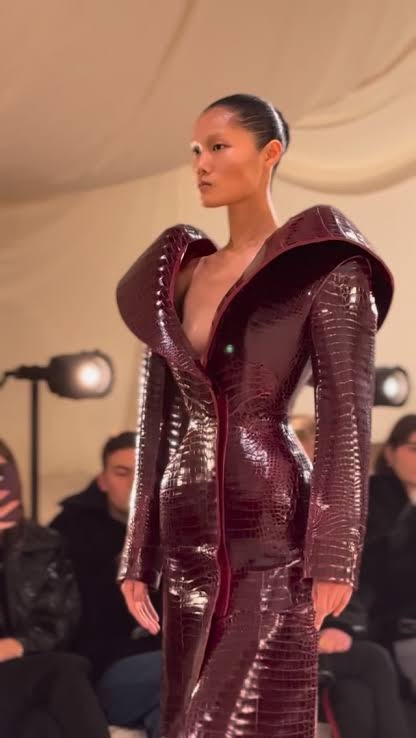
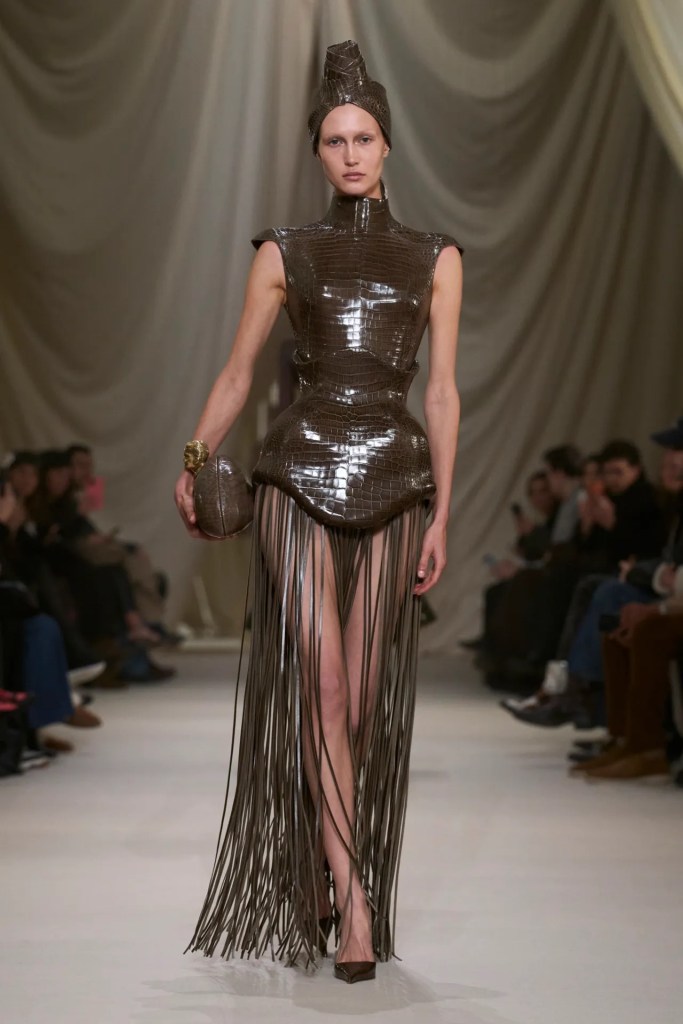
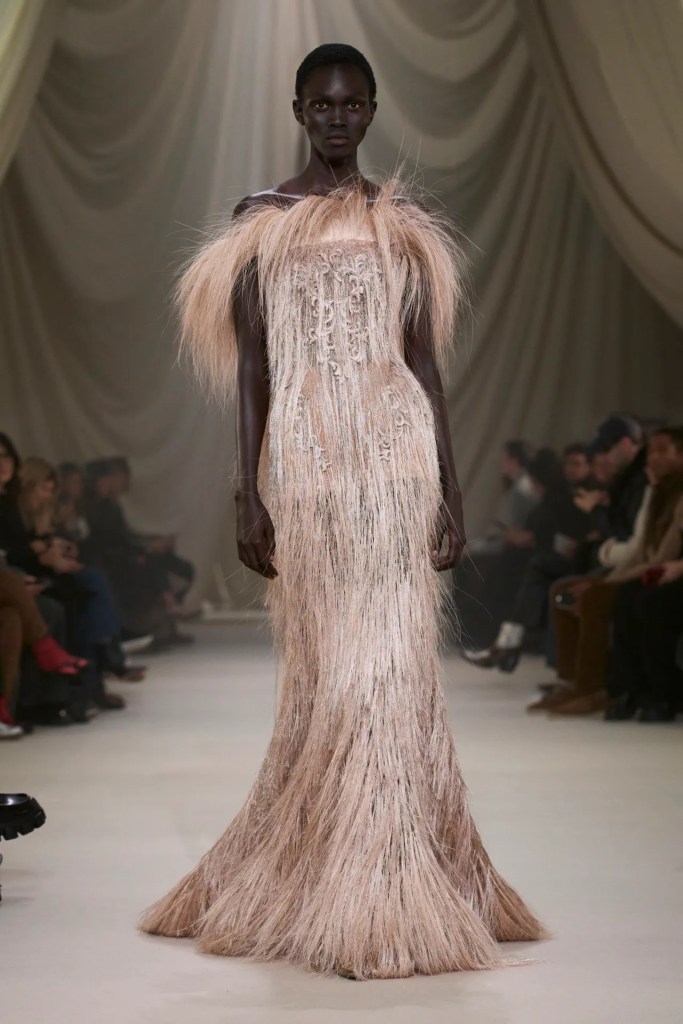
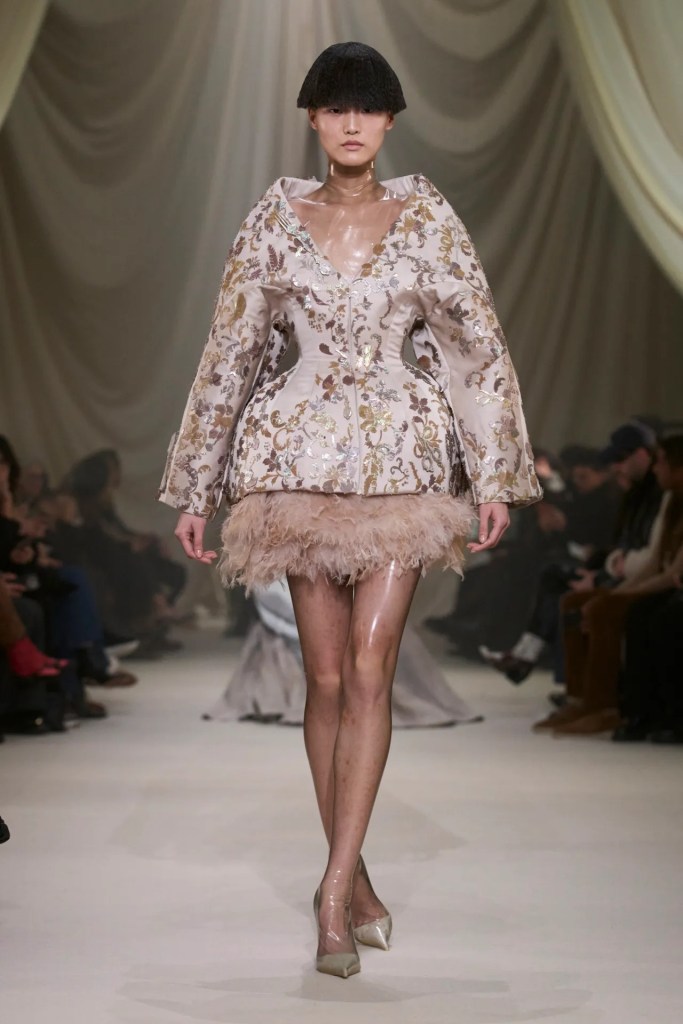
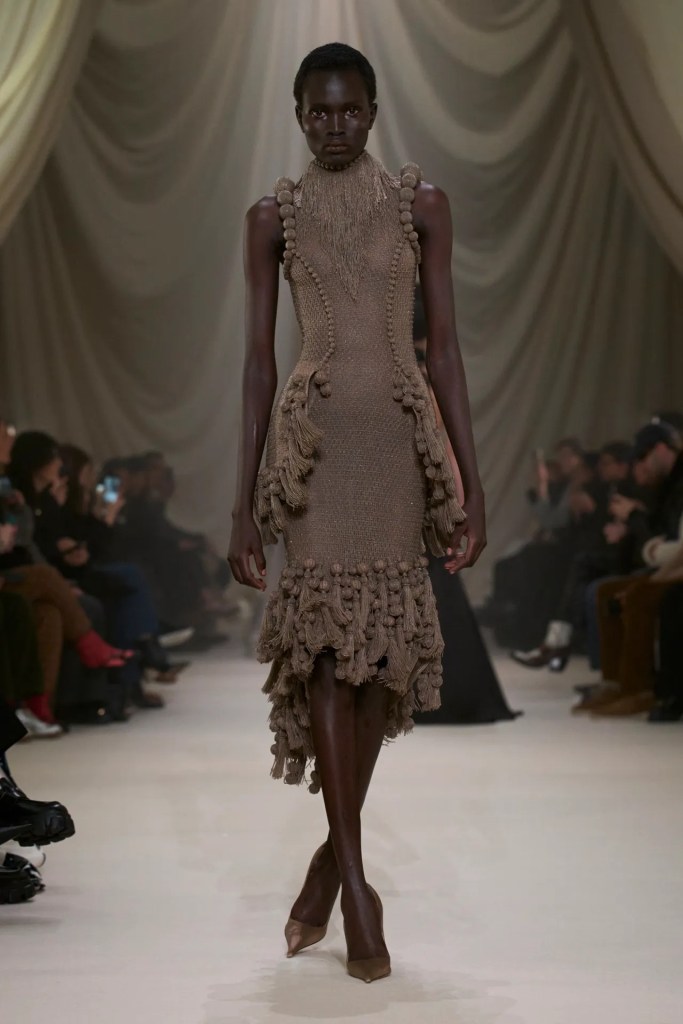
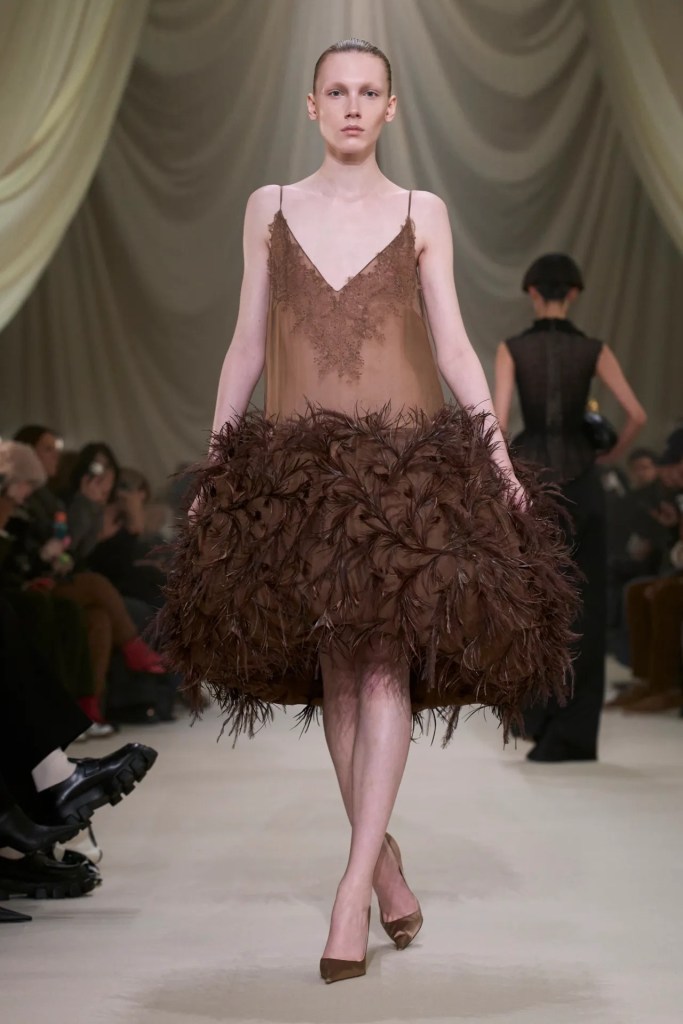
Ashi Studio’s Spring 2026 collection unfolds as a lucid reverie where couture transcends mere dressmaking to become a meticulous, cinematic meditation on mourning, desire, and the sovereign act of control. In a pavilion of celestial whiteness and shadowed opulence, the house unfurls a vocabulary of elegance that is at once austere and deliriously luxurious, a parlor of technique and sentiment that caresses the imagination with the acuity of a finely tuned instrument. Accessories enter as surreal punctuation, with clutch handles fashioned from antique human‑head doorknobs sourced from Paris’s Marché Clignancourt, blurring the boundaries between object, relic, and provocation. In this febrile drama of meaning, form and myth cohere with forensic exactness, transmuting quotidian accoutrements into talismanic theater and binding memory to myth with archival precision.
Historically Drenched and Decisively Contemporary
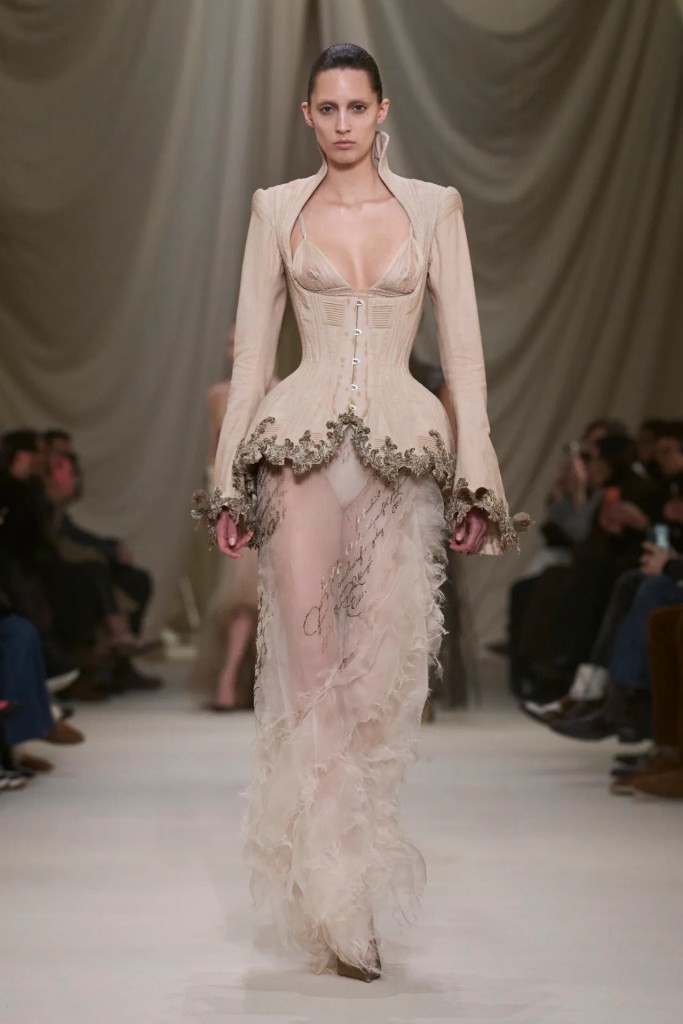
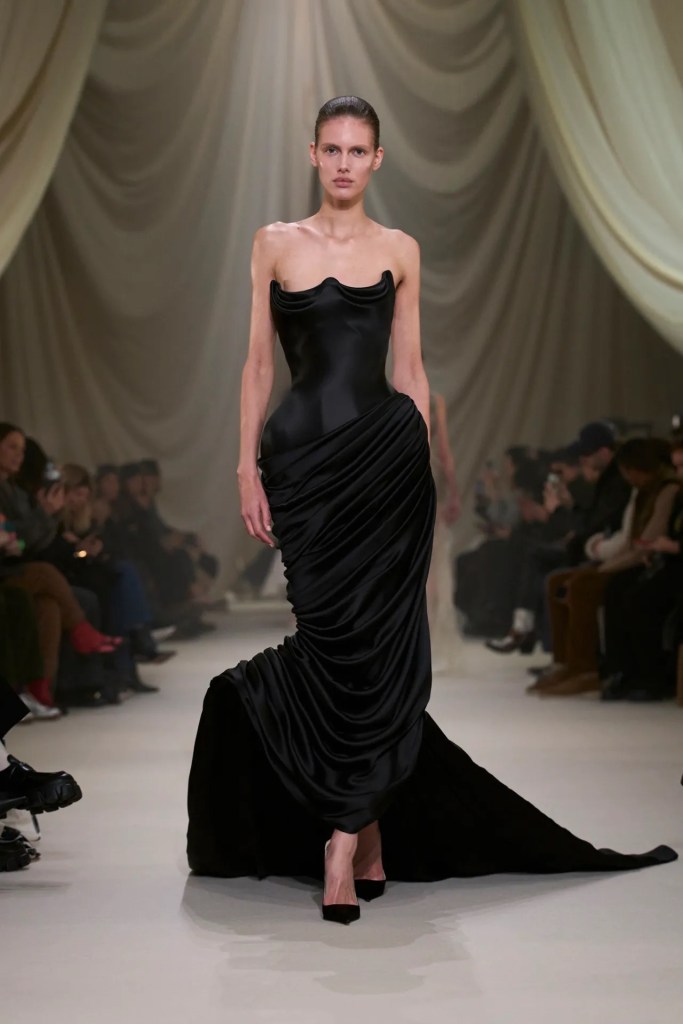
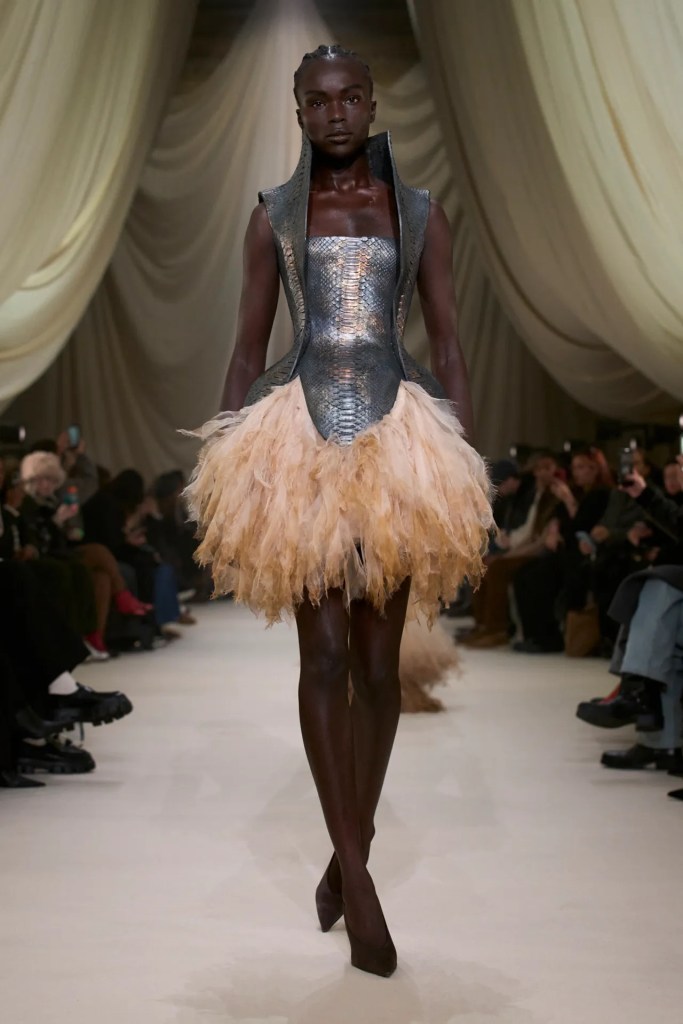
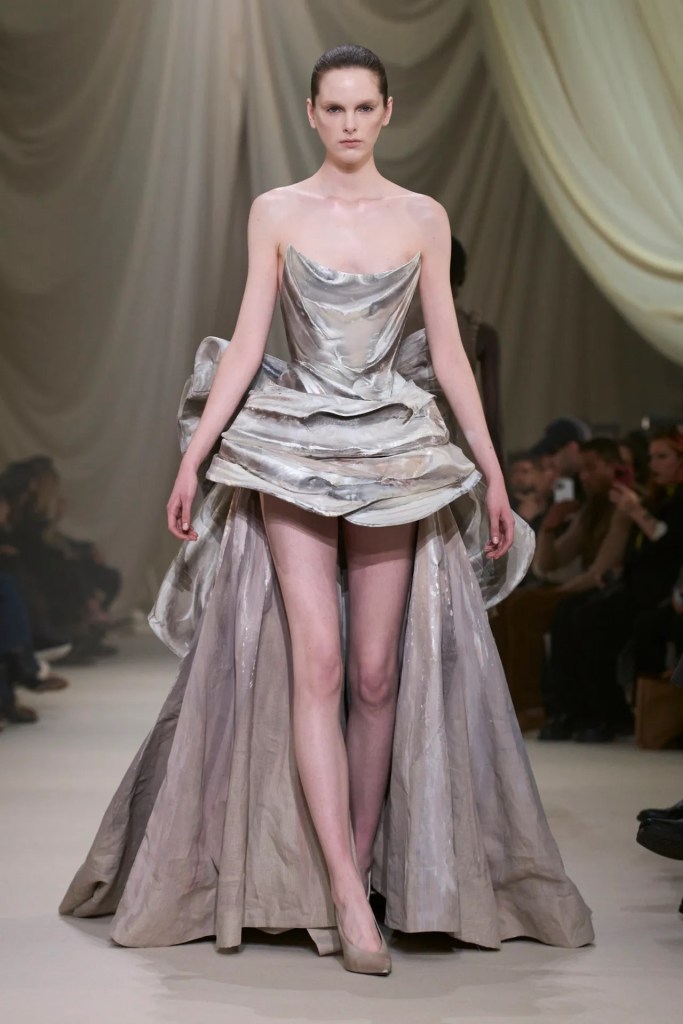
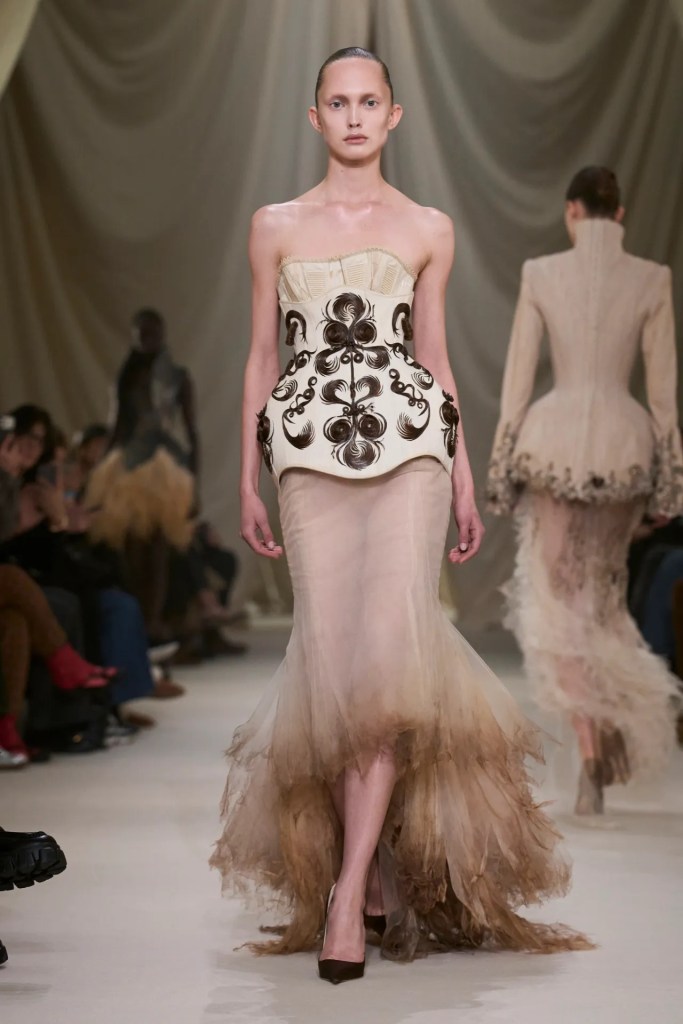
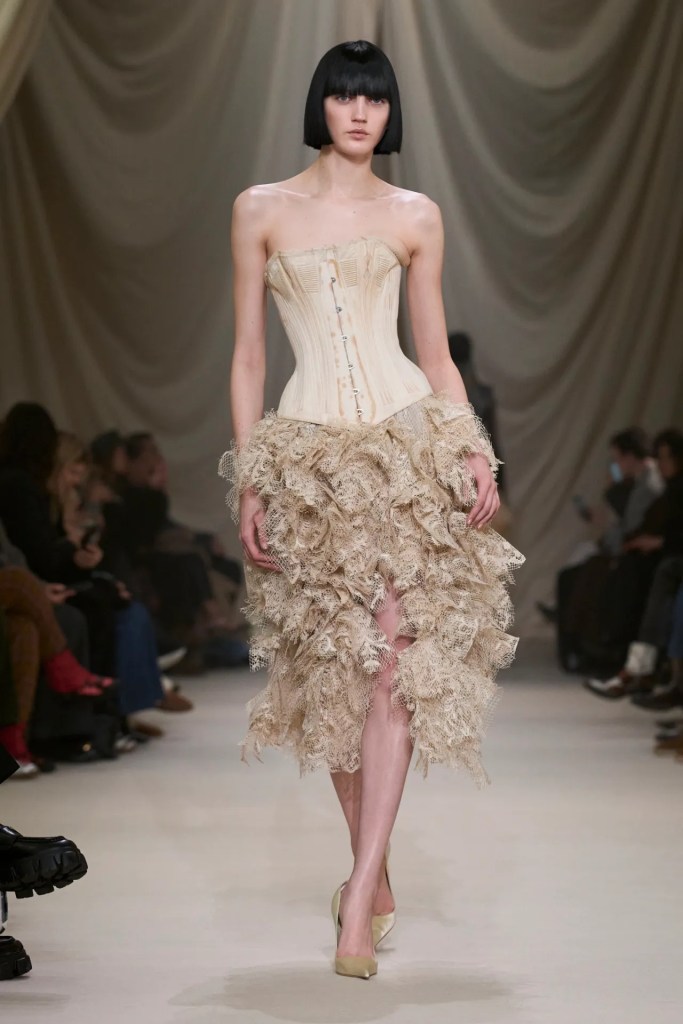
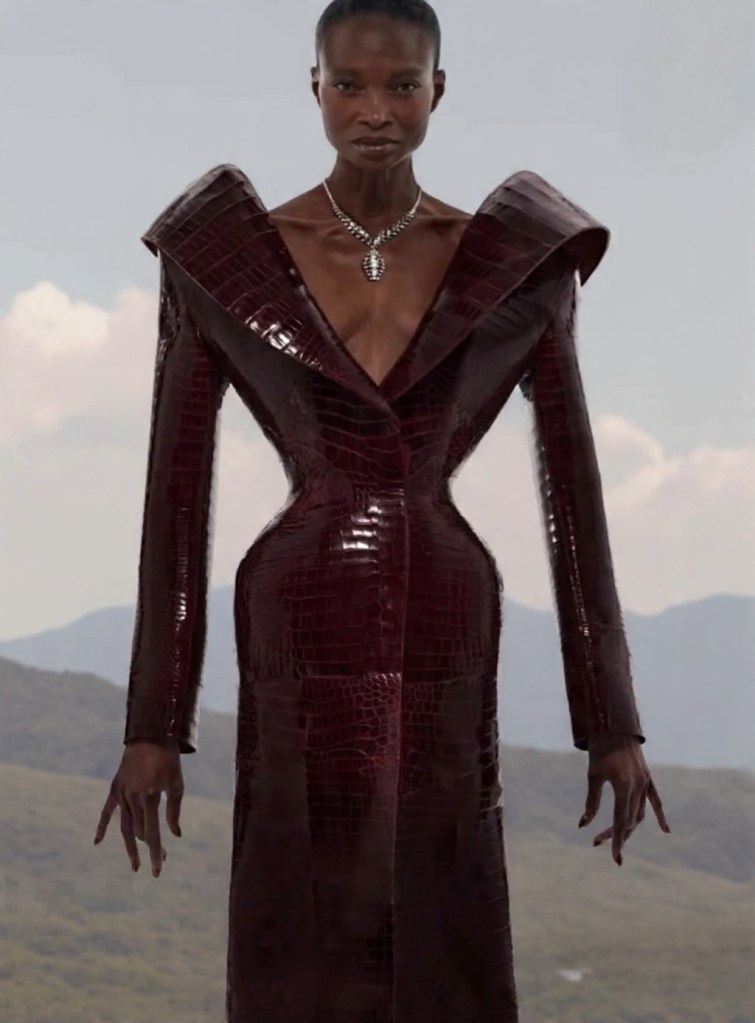
Hair, Corsetry, and the Continuum of Control returns to a central thesis: Victorian hair jewelry reappears as a master motif, braided, twisted, and sculpted into constellations that either anchor the gowns or traverse the back like a spinal helix, a tether between era and avant‑garde sensibility. Corsets—constructed with 18th‑century techniques—cinch waists into ultrafeminine bell‑shaped silhouettes, the hips buoyed by rounded peplums and shell‑like volumes. The silhouette is not merely a contour but an organ of intention, a disciplined sculpture that asserts agency through architecture. The designer’s lifelong fascination with restraint, mourning, and desire threads through the collection, rendering garments that feel both historically drenched and decisively contemporary.
Mood: Surreal, Sensual, and Macabre
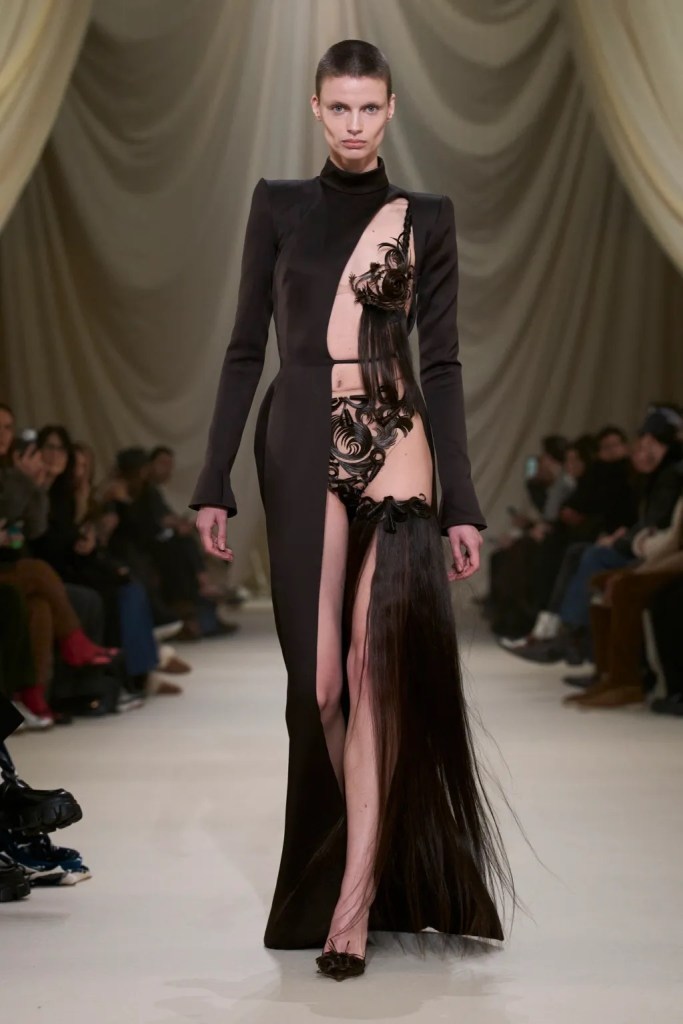
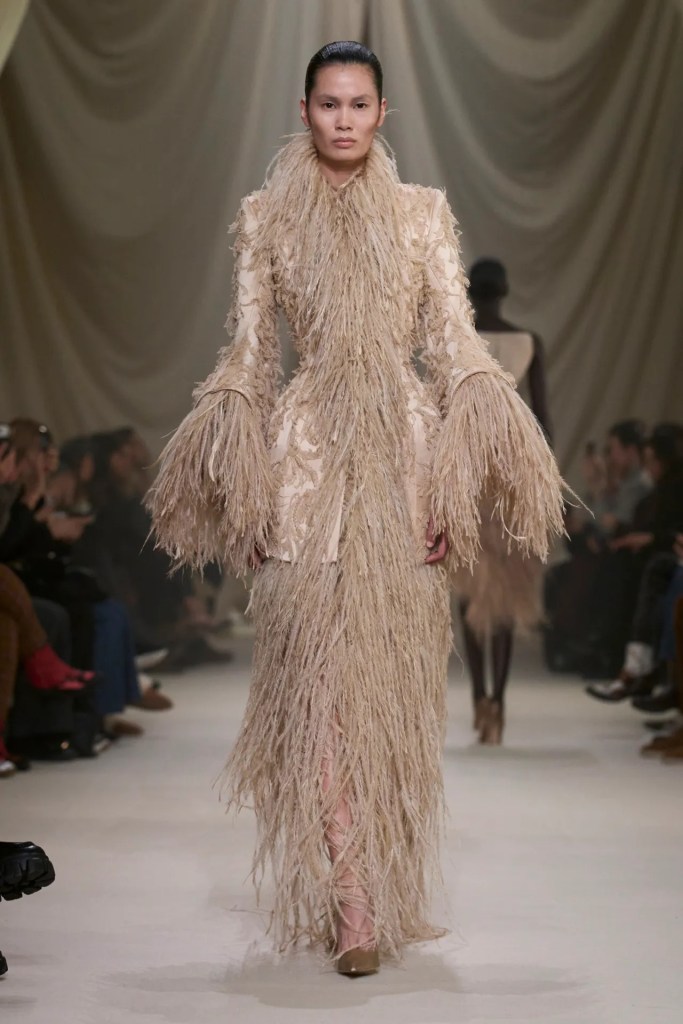
Gown Vocabulary unfurls as a triad of mood: Surreal, Sensual, and Macabre. Hair braids into serpentine swirls that merge with the gowns, evoking mourning jewelry while leaping forward into the lexicon of modern silhouette invention. Ghostly handprints beneath gauze, long‑lost love‑letter scripts, and red wax seals drift through the fabrics, delicate annotations of memory that haunt the surface with ceremonial gravitas. Death moths and dangling skeleton keys punctuate the wardrobe as talismanic emblems, infusing the collection with a measured unease that remains elegantly legible as couture. Inside the glowing cocoon of a white tent, lighting and atmosphere intensify the collection’s material magic: cotton fabrics treated with adhesive techniques register as a visible cling—moisture clinging to skin, a breath‑like presence that renders the cloth pliant to sensation. Trompe‑l’oeil painting animates flat textiles into bows and drapery that defy spatial predictability, while a translucent plastic layer skims the skin, bestowing a porcelain‑doll gloss that elevates the uncanny into an elevated polish. This repertoire of craft is reinforced by collaborations with artists rooted in cinematic set fabrication, including the hair‑design cohort behind last year’s Dracula, whose artistry threads through the show like a dark runway of dream logic.
Memory, Myth, and Modernity Perform in Prolonged, Lucid Harmony
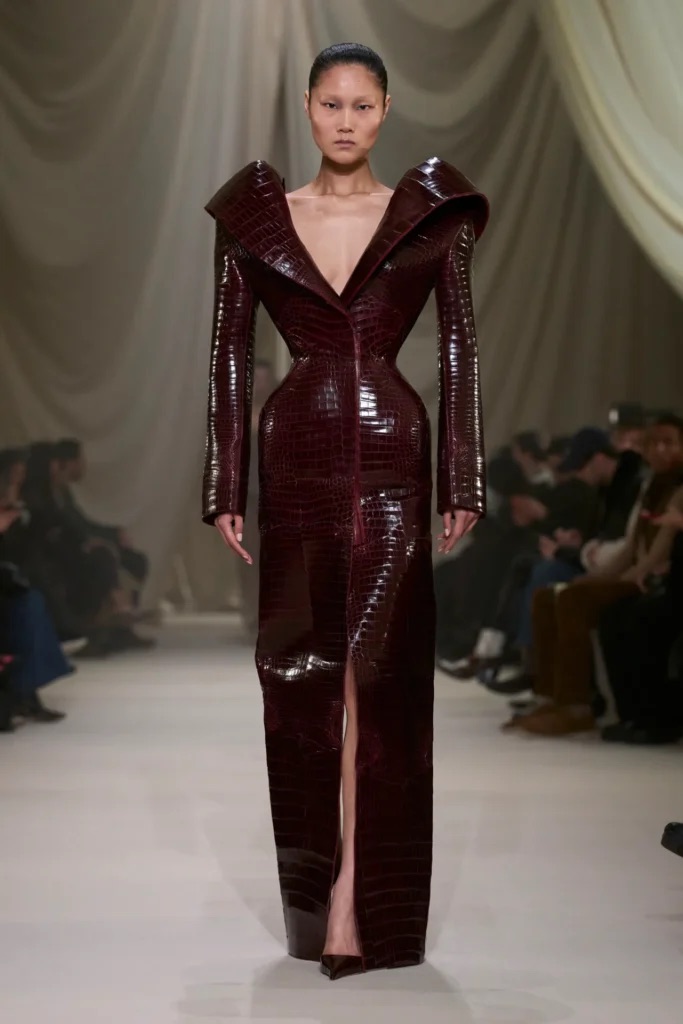
The back emerges as a focal catechism for the collection—a stage upon which pearl‑drenched bustles, elongated trains, and back‑ward architectures perform a ceremony of presence. The architectural line of the rear view serves as a manifesto of dignity and restraint, translating solemnity into a visual language that commands reverence without surrendering sensuality. The palette remains a sovereign black that absorbs light and radiates intention, allowing texture and finish to assume the role of narrator, while a signature black sequined gown with a dramatic T‑shaped back and vertebral tassels underscores the collection’s devotion to line and cosmic balance.
Lighting and collaboration function as theatrical vehicles within the white tent’s envelope, transforming the runway into a veritable stage where memory, myth, and modernity perform in prolonged, lucid harmony. The fusion with cinematic set artistry—the on‑set hair designers who lent their genius to Dracula—renders the show a theatre of couture in which garment and artifact dissolve into a ritual of meaning. This is a space where every seam and silhouette declares a language, inviting the observer to decipher a lexicon that is at once opulent and disquieting.
The corset, once thought to recede, reclaims its throne as a symbol of feminine empowermen
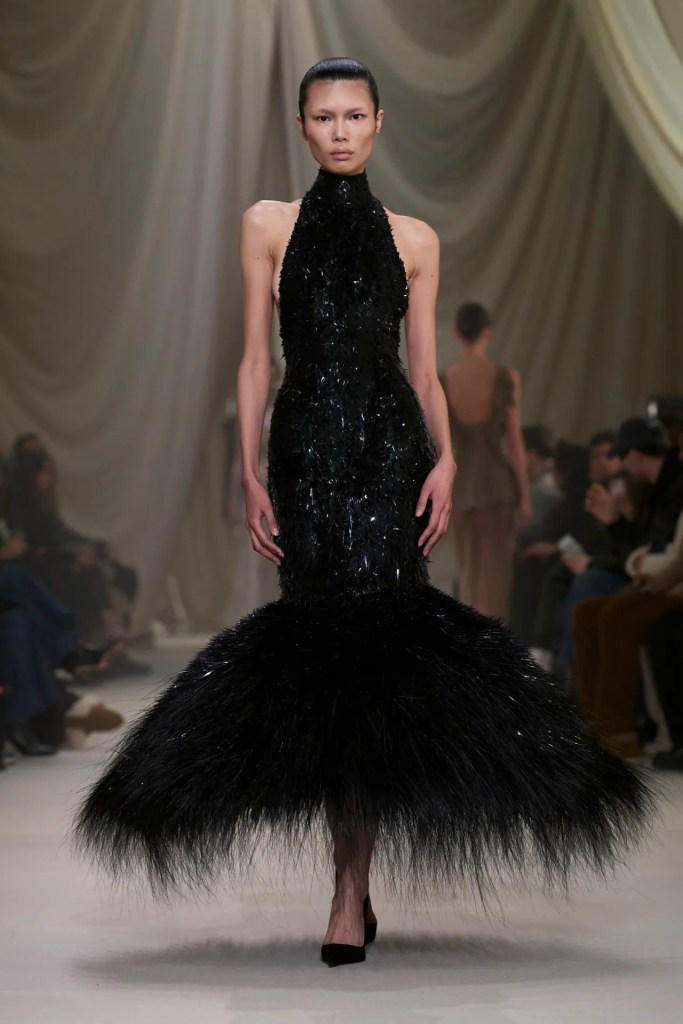
The corset, once thought to recede, reclaims its throne as a symbol of feminine empowerment. Ashi’s declarative diction—“Everyone wants to be snatched”—poses a lucid counterpoint to whimsy, converting the body’s architecture into a canvas for intention and sovereignty. This is not mere decoration but a canonical discourse between liberation and constraint, where form becomes instrument and silhouette becomes decree.
“Everyone wants to be snatched”
 IN BLACK MAGAZINE